Well, we've finally made it here once again! After careful deliberation, I have decided to focus on the women of some of the texts that we've read. Here's what I am thinking and why.
Texts to be discussed:
-Margaret Fuller's "The Great Debate" (Transcendentalism)
-Freeman's "The Revolt of Mother" (Local Color and Regionalism)
-Jewett's "A White Heron" (Local Color and Regionalism)
-Henry James' Daisy Miller (Realism)
-Hawthorne's "The Birthmark" (Dark Romanticism)
Tentative thesis:
"Some women represented in the fictional works listed above are defined by the societal roles placed on the female sex, and are often victims of the stories because of this reality. However, the few women who represent independent thinking convey a positive message of individuality that actually encourages the women of the present society to embrace their womanhood, presenting a call to action for equality. Through the examples of these fictional women, female readers are encouraged to claim and fight for their individual identity, and coupled with women's non-fictional works such as Fuller's Essay "The Great Debate," the movement of women's suffrage was inevitable. Present day society would not be the same had texts like these not paved the way, illustrating that it was in fact possible for women to break the mold that had previously confined them."
Why I chose these works:
I chose Daisy Miller because at the time, she was considered the stereotype of American women. Her biggest concern was not her studies or a possible career, it was partying and fooling around until eventually a marriage to an upstanding gentleman presented itself. Because of the lack of convention and avenues for women to rise above preconditioned roles, the purpose of a woman's life was pretty much exemplified through Daisy's character. It was because she didn't have other options that she chose to act the way that she did- she was bored with her life, and all she cared about was looking pretty and flirting. Her tragic end in death only makes an example of her, showing that women who are confined by the stereotypes placed by men will search for happiness elsewhere, and that elsewhere just might include unconventional methods of man-hunting. She never got the chance to explore her options and discover who she really was.
I chose "The Birthmark" for similar reasons, only this story is more of a display of a husband's control over his wife. Georgiana had never been so mortified by her birthmark until she got married and her husband admitted his repulsion of it. Her feelings were so manipulated by him that it didn't even take much effort on his part to convince her to allow him to try and remove it. She is completely his property, and doesn't feel valued in her natural state- her identity is completely enveloped in being Aylmer's wife. Her fate ends in a tragic death also.
Things turn around a little bit for the the women in "The Revolt of Mother" and "A White Heron," as both women are able to make decisions for themselves that lead to freedom. In Freeman's text, Mother finally breaks free after 40 years of servitude to her family and of course, husband. She and her children might have been apprehensive or nervous about taking that final step and moving everything they owned to the barn, but Sarah stood her ground and didn't show any sign of weakness in her decision. Father completely gave in and didn't protest to her desires, and she was able to grasp everything she'd ever wanted in those 40 years- a new home.
In Jewett's "A White Heron," Sylvia encountered a specific moment in her youth in which she was able to make a choice that would change her life forever. She played host for a while, and yes she was indeed captivated by this new gentleman hunter, but in the end she was able to make her own moral decision about whether or not to tell him about the location of the white heron. She makes a choice that will later lead to other choices in her life, this incident was merely an avenue that would open thousands of doors down the road for her. Sylvia experienced a physical or intellectual awakening, which sadly some of the women in earlier texts never had the opportunity to have themselves. Though it was against common ideology for a woman to think solely for their own purposes, Sylvia embarks on a journey of self discovery here in this story.
The last text I would like to incorporate in my studies is Fuller's article "The Great Debate," simply because it was an extremely influential text of the time that addresses the very issues that the aforementioned texts present. She discusses women's constant dependence on men and how society has set it up specifically for women to be this way, and argues that marriage itself has presented this flaw in heterosexual relationships. She is clearly on the forefront or women's suffrage, and is in fact one of the first women to in fact pave the way for this entire movement. She argues that women are equally intelligent and capable of leading their own lives, which her own life exemplifies. I am going to end my paper discussing how each female character is either flawed because of a lack of independence from men or how they have benefited from this way of thinking, because her work is the only non-fiction work that we read addressing this topic, written with a beyond clear call to action that other texts might have hinted at, but non directly addressed.
So that's my proposal. Any other thoughts or ideas would be appreciated, as well as possible sources to support my work. Thank you!
Thursday, April 8, 2010

Saturday, April 3, 2010
In Muir's Footsteps. . .
"Azure skies and crystal waters find loving recognition, and few there be who would welcome the axe among mountain pines, or would care to apply any correction to the tones and costumes of mountain waterfalls."- John Muir, Wild Wool.
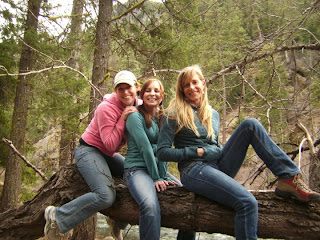
Girls in a Tree.
 Muir inspired examining effects of humans on Mother Nature.
 The serene landscape that we encountered upon our voyage through the wilderness.
  The creek that flowest along the forest floor.
 The watery depths don't appear as scary as they did when we walked over them.
Thug life.
 Stuck in the snow. . .
Stephanie and her Elk call. . . you can totally see them milling around in the background.
 Communing with nature. . .
 John Muir would have been proud.
 Girls in the woods, following in Muir's footsteps.
 Daisy Miller Meets. . . .Girls Gone Wild?

I just have to say for all of you people who finished The Coquette earlier this week, are these two stories not eerily similar???
Moving on. I can see how Americans might have been offended back in the day for the flirtatious Daisy Miller being the supposed representative for the typical American girl, loose and unrefined. Back then, world travel wasn't as accessible of an endeavour as it is today, and anything read in print was a big deal and were taken seriously.
But come on!!! Just because one little book says it's so does not make it the truth- and Daisy Miller is a fictional work! Henry James is not claiming that all girls are like Miss Miller!(but if we find out on Tuesday that he really did think this, ignore the aforementioned statement.) Does anyone remember what happened when Borat made his way across America? Hello!!! He thought TONS of things were true about American girls because he had seen real live footage of drunk college chicas taking off their clothes in Girls Gone Wild videos! I mean seriously! The main point I'm trying to make here is that readers should always analyze the texts they are reading critically, and understand that the arguments being made may in fact be debatable.
I think the focal point of the story( and I guess we'll find out if I'm grasping at straws on Tuesday) is foreign relations and the fascination of other cultures. Winterbourne is constantly making pro-American statements such as "American girls are the best girls" and "American's candy's the best candy" (6). Well come on, you know it's true! And even Daisy makes comments here and there indicating that her main interest in any country or culture is its society: "The society's extremely select [in Rome]. There are all kinds- English, Germans, and Italians. I think I like the English the best. I like their style of conversation. But there are some lovely Americans. I never saw anything so hospitable" (39). Both Daisy and Winterbourne are infatuated with other cultures, and the entire novel illustrates how one is easily swept up in this idea of racial pride.
The most important thing that Daisy says, however, is in her heated response to Mrs. Walker's exclamations that she was ruining her reputation by taking long walks in the dark alone with a strange man (well, come on now, who are we kidding. . . she kind of was- no matter what society she was a part of). Nevertheless, she argues: "The young ladies of this country have a dreadfully poky time of it [entering relationships with members of the opposite sex], so far as I can learn; I don't see why I should change my habits for them" (49). She admits to being a flirt and attracted to men of foreign lands, and she refuses to abandon her "dating style" for the sake of reputation., to which her companion responds, "Flirting is purely and American custom; it doesn't exist here" (50).
So there you go. Daisy feels confined by all the rules of each society she tries to become a part of (though society is all that she lives for), yet she is unwilling to relinquish her now taboo act that we call "the flirt." Doesn't really matter what she decided to do or didn't decide to do, because in the end she DIES and so her flirtatious, dare I say, coquettish days are abruptly ended. (Again, similarities are presented between this and The Coquette). Henry James couldn't think of a better way to put an end to the dreadful flirting- he just had to off her in one page. ONE PAGE. She was so evil, wanting to be free from social pressures. I guess that flirtatious American bitch really got what she deserved.
Friday, March 26, 2010
Hawthorne: A Brief Comparative Analyisis (And a quick fun bounce back into Dark Romanicism!)
Hello all! This is just an extra blog post that I promised Julie I'd write long ago, because I was (and still am) extremely embarrassed that I wasn't able to discuss Rappaccini's Daughter back in week 7 due to the fact that I hadn't read it. Well, now I have read it! After choosing another Hawthorne piece for essay 3 of the midterm, I have decided to compare the two texts in order to highlight key themes in Hawthorne's work. There are definite similarities found in Hawthorne's texts"The Birthmark" and "Rappaccini's Daughter," and both stories include strong arguments that man does not have the right or the power to mess with Nature.
In "Rappaccini's Daughter," There is an act of worship regarding Nature that cannot be overlooked. Within the opening of the story, the author establishes that Giovanni "found no better occupation than to look down into the garden beneath his window," and upon his gift of the plant to Beatrice, she promises "Yes, my sister, my splendor; it shall be Beatrice's task to nurse and serve thee; and thou shalt reward her with thy kisses and perfume breath, which to her is as the breath of life!" Sure, she is intimate with the plants because she has been severly effected by them physically, but both of these characters posses great respect for these plants, and it is shocking how this respect later evolves into a blatant abuse of the plants when this very science was meant only to develop medicines for the good of mankind, which should Nature in it's position of power. Later, readers discover that Beatrice has indeed fallen victim to her father's experiments, "the effect of my father's fatal love of science-- which estranged me from all society of my kind." She is poisonous, and Giovanni discovers that his exposure to the strange plants has made him poisonous as well. I think the death of Beatrice indeed teaches Rappaccini a lesson in leaving Nature alone.
A similar tale is told in Hawthorne's "The Birthmark," in which the main character Aylmer is a scientist who's sole desire has become the removal of his wife Georgianna's unsightly birthmark:
“What will be my triumph when I shall have corrected what Nature left imperfect in her fairest work!” Aylmer is extremely confident in his abilities to undue such a permanent blemish, and breaks down Georgianna's spirit to the point where she gives in to his wishes to remove it. It is as if she is teetering on the final thread of life when she exclaims, “Danger is nothing to me; for life, while this hateful mark makes me the object of your horror and disgust, -- life is a burden which I would fling down with joy. Either remove this dreadful hand, or take my wretched life!” He finally manipulated her to the point of no return- she doesn't care what the cost is, she just wants the dreadful mark gone. The whole point of the story, however, is how defiant acts against Nature never end well, and she of course dies on the operating table.
Hawthorne's theme of science's fatal quest to defy Nature is evident in both of these stories, each ending tragically. It seems that Hawthorne chooses the most innocent to die in order to teach lessons to those who abandoned the worship of Nature in the first place, which is an important element to note. So basically, think twice before the next time you litter.
In "Rappaccini's Daughter," There is an act of worship regarding Nature that cannot be overlooked. Within the opening of the story, the author establishes that Giovanni "found no better occupation than to look down into the garden beneath his window," and upon his gift of the plant to Beatrice, she promises "Yes, my sister, my splendor; it shall be Beatrice's task to nurse and serve thee; and thou shalt reward her with thy kisses and perfume breath, which to her is as the breath of life!" Sure, she is intimate with the plants because she has been severly effected by them physically, but both of these characters posses great respect for these plants, and it is shocking how this respect later evolves into a blatant abuse of the plants when this very science was meant only to develop medicines for the good of mankind, which should Nature in it's position of power. Later, readers discover that Beatrice has indeed fallen victim to her father's experiments, "the effect of my father's fatal love of science-- which estranged me from all society of my kind." She is poisonous, and Giovanni discovers that his exposure to the strange plants has made him poisonous as well. I think the death of Beatrice indeed teaches Rappaccini a lesson in leaving Nature alone.
A similar tale is told in Hawthorne's "The Birthmark," in which the main character Aylmer is a scientist who's sole desire has become the removal of his wife Georgianna's unsightly birthmark:
“What will be my triumph when I shall have corrected what Nature left imperfect in her fairest work!” Aylmer is extremely confident in his abilities to undue such a permanent blemish, and breaks down Georgianna's spirit to the point where she gives in to his wishes to remove it. It is as if she is teetering on the final thread of life when she exclaims, “Danger is nothing to me; for life, while this hateful mark makes me the object of your horror and disgust, -- life is a burden which I would fling down with joy. Either remove this dreadful hand, or take my wretched life!” He finally manipulated her to the point of no return- she doesn't care what the cost is, she just wants the dreadful mark gone. The whole point of the story, however, is how defiant acts against Nature never end well, and she of course dies on the operating table.
Hawthorne's theme of science's fatal quest to defy Nature is evident in both of these stories, each ending tragically. It seems that Hawthorne chooses the most innocent to die in order to teach lessons to those who abandoned the worship of Nature in the first place, which is an important element to note. So basically, think twice before the next time you litter.
Thursday, March 25, 2010
The Revolt of the White Heron- A Voice for Women
 For those of you who grew up not knowing Laura Ingalls and her family, well, here they are! The barn in the background of this picture is not unlike the very barn I had imagined while reading Freeman's "The Revolt of Mother."
On to Feminism. Both of the texts we read for today were clear arguments for women's rights, and I want to explore that idea further through examples that jumped out at me from the short stories themselves. While "The Revolt of Mother" was more of a warning to both the American government and society itself, Jewett's "A White Heron" promoted a woman's quest to discovering her own identity.
One of the moments in "The Revolt of Mother" that stuck out to me in particular was when Mother and her daughter were doing chores together, "Her mother scrubbed a dish fiercely. 'You ain't found out yet we're women-folks, Nanny Penn,' said she. 'You ain't seen enough of men-folks yet to. One of these days you'll find it out, an' then you'll know that we know only what men-folks think we do, so far as any use of it goes, an' how we'd ought to reckon men-folks in with Providence, an' not complain of what they do any more than we do of the weather.'" From just the simple act of scrubbing a dish fiercely, the reader is clued into the fact that this woman might not like the way things are, but she is grittin' her teeth and submitting anyways. Mother is using this conversation with her daughter to educate and warn her of the societal rules. Wives are not to question their husbands, and women are viewed on a lower level than men. Mother's own son had been aware of the building of the barn (FOR THREE MONTHS!) and didn't feel it necessary to clue his mother in on it. Even though this act would appear to be dishonest and sneaky in modern times, back then it was normal practice to make big decisions that concerning the welfare of the entire family without consulting the wife. Mother was fully aware of her duties.
We all know that this situation only lasted 40 years (ONLY), and eventually Mother snapped and took matters into her own hands. After a lifetime of servitude to a man who did not seem to value her opinion or desires, she made a life changing decision that could have been disastrous- Instead, Father found the error of his ways and recognized that her needs were just as important as his own. How ironic that the country was on the cusp of the Women's Suffrage movement, not quite ready to take the plunge, yet teetering on the edge of equality.
Jewett took a more subtle approach in "A White Heron," allowing the process of moral dilemma be the turning point for young Sylvia. Rather than revolt vocally against the hunter-man, she made an internal choice to omit information that would have allowed him to complete his mission of finding a white heron.
The first point I would like to make about the young man is that he treats these women just the same as the woman in Freeman's text. Upon his arrival, he was searching for a place to stay, and though it appeared to be a simple request, his demanding demeanor is a bit shocking (to me).
"Put me anywhere you like," he said. "I must be off early in the morning, before day; but I am very hungry, indeed. You can give me some milk at any rate, that's plain." It's not that he's unkind, and I realize that customs were different back then, but I do ask: would he have spoken this way if Sylvia had been living with her grandfather and not her grandmother?
As Sylvia embarks on her journey of enlightenment, she questioned his motives secretly: "Sylvia would have liked him vastly better without his gun; she could not understand why he killed the very birds he seemed to like so much." Though she was captivated by the young man, she had enough awareness to wonder whether his purposes were moral. She is very unlike Mother in her ultimate decision to remain silent, as she does not directly confront the hunter.
Are the messages the same in both of the texts? I would argue that they are in fact both in favor of feminism, however the push for gender equality is definitely more apparent in "The Revolt of Mother." One aspect of the story to consider is how long it took Mother to do what she did. She withstood the inequality for 40 years before she said something. Perhaps if she had experienced what Sylvia had when coming of age, she might have been enlightened enough and strong enough to realize her value sooner. Through "A White Heron," many messages can be conveyed concerning equality among all peoples, especially when Capitalist gains are in the picture.
So the final question is: money or piece of mind? I'll let you decide.
Thursday, March 11, 2010
A Victorian War?


"The Crimean is today less compelling, and the generic conventions Fenton used to naturalize the scenes of war seem contrived or empty. The very conventions that make these photographs difficult for us to read, were, however, what made them appealing to a Victorian audience that desired to possess history." The Crimean photograph above is a perfect example of what Natalie Houston was talking about in her article, as if definitely appears to be staged in some way. I mean, the gentleman pictured in Fenton's "The Artist's Van" is sitting perfectly stoic on a wagon that is being led my nothing. So he's just sittin' there, staring blankly into space. Sure, it's artistic, and I'm sure at the time it was taken that this type of photograph was all the rage, but I definitely feel the loss that Houston discussed in her article. If the audience isn't able to decipher the purpose of the picture, then how are they able to appreciate it?
Houston claims that "By focusing on the officers and portraying them in this stylized manner, the real hardships faced by the troops are minimized, suggesting perhaps Fenton’s political acquiescence to his Royal sponsor. " I get that he couldn't get a clear shot if people didn't stand still, but the fact that a good chunk of the people in the photos are in clean, pressed uniforms doesn't make it seem like there's a war going on. His style is extremely Victorian, very formal, and while he at least gives recognition to those who were there, the rules that prohibited him ends up devaluing the experience of the soldiers. By not being able to capture images of dead bodies (as horrible as that sounds) and technology restricting his ability to capture battle scenes, without a written explanation of things we would never really get the whole picture.
Houston points out that "The primary function of Fenton’s photographs was to memorialize and record that which was already known, rather than to present something new." This technology was so new, they knew the limits. They were there simply to record, to capture even the smallest piece of the souls of the men who were there, and now we have teh history to prove it. Are they staged? For sure. Are they realistic to the settings? Not really. But did each of the men photographed serve their country? Absolutely. And I suppose that's what counts.
Thursday, March 4, 2010
Whitman is sportin' the Levi's
You know, I'm just going to start off by saying how BRILLIANT I think it is that Levi's used Walt Whitman's poetry and even his own voice in order to promote their brand name. It is clear that Whitman had a great love for his country, and I feel that love is excellently put to use for America's advertisements. McCracken quotes Whitman:"The proof of a poet is that his country absorbs him as affectionately as he has absorbed it." Levi's has always been associated with America and the working man, it is the oldest, most trusted brand, and the men who shaped our lands and worked our fields wore them. With all things considered, the only person better suited to be a spokesperson for Levi's would be John Muir. . . (That's for you, Julie!).
In Leaves of Grass, Whitman argues, "Come to us on equal terms, Only then can you understand us, We are no better than you, What we enclose you enclose, What we enjoy you may enjoy." Who are we kidding!! It's like Gold points out, "Advertising has taken up what Whitman thought was the poet’s job." And it's true! I really felt like the article celebrated any involvement that the Levi's campaign had with Whitman. Just from my own perspective, why wouldn't you want to include someone who contributed so much to America's literary past? Not only are they helping to promote his standing legend, but they are revisiting the roots that Whitman reminded America about in the first place. You just can't go wrong when you incorporate things that people should already know (but probably don't) into something that they can see in their everyday lives. Too much of our history is lost on the younger generations as it is.
Poets were the voice of the past. Is it sad and disappointing that advertisement is the great influencer of the future? Of the present? I kind of think so.
In Leaves of Grass, Whitman argues, "Come to us on equal terms, Only then can you understand us, We are no better than you, What we enclose you enclose, What we enjoy you may enjoy." Who are we kidding!! It's like Gold points out, "Advertising has taken up what Whitman thought was the poet’s job." And it's true! I really felt like the article celebrated any involvement that the Levi's campaign had with Whitman. Just from my own perspective, why wouldn't you want to include someone who contributed so much to America's literary past? Not only are they helping to promote his standing legend, but they are revisiting the roots that Whitman reminded America about in the first place. You just can't go wrong when you incorporate things that people should already know (but probably don't) into something that they can see in their everyday lives. Too much of our history is lost on the younger generations as it is.
Poets were the voice of the past. Is it sad and disappointing that advertisement is the great influencer of the future? Of the present? I kind of think so.
Friday, February 12, 2010
The Veiled Minister and. . . Lady Gaga?

Lady Gaga: Born Stefani Joanne Angelina Germanotta on March 26, 1986.
Through the seemingly infinite knowledge of Wikepedia and my own intuitive response to the reading, I discovered a key point of Dark Romanticism that also appears in The Minister's Black Veil:"Dark Romantics present individuals as prone to sin and self-destruction." In relation to Hawthorne's works, Wikepedia also informs us that: "His themes often center on the inherent evil and sin of humanity, and his works often have moral messages and deep psychological complexity." For those of us who have read it, TMBV absolutely fits this genre! I think the character of the preacher was defined within that last description of Hawthorne's writing.
Among some of the first responses of the congregation to Hooper's black veil was this:"The black veil, though it covers only our pastor's face, throws its influence over his whole person, and makes him ghostlike from head to foot. Do you not feel it so?'' The entire congregation is affected by this simple garment and the mystery behind it. "Each member of the congregation, the most innocent girl, and the man of hardened breast, felt as if the preacher had crept upon them, behind his awful veil, and discovered their hoarded iniquity of deed or thought." I think the most important fact to make about the veil itself is that it represents the unknown, or "the Other," which will always strike fear and doubt in the hearts of everyone else.
Among some of the first responses of the congregation to Hooper's black veil was this:"The black veil, though it covers only our pastor's face, throws its influence over his whole person, and makes him ghostlike from head to foot. Do you not feel it so?'' The entire congregation is affected by this simple garment and the mystery behind it. "Each member of the congregation, the most innocent girl, and the man of hardened breast, felt as if the preacher had crept upon them, behind his awful veil, and discovered their hoarded iniquity of deed or thought." I think the most important fact to make about the veil itself is that it represents the unknown, or "the Other," which will always strike fear and doubt in the hearts of everyone else.
First of all, it was not a normal thing to hide your face. People who wear masks are weird, for one. Remember Lady Gaga and her unforgettable performance at the VMAs? I mean, she was of course eccentric before that little stunt, but the simple truth of the matter is that people who hide their face, hide their EYES, tend to come off as untrustworthy, even scary. What is that old saying?: The eyes are the window to the soul?


So what exactly is little miss Gaga trying to hide here?
"He has changed himself into something awful, only by hiding his face.'' At least that's what members of the church said about Mr. Hooper. The revelation of the mask comes later in the story, in Mr. Hooper's conversation with his wife, when he says: "I, perhaps, like most other mortals, have sorrows dark enough to be typified by a black veil."
So this is it, my friends. This is what it all comes down to. Mr. Hooper feels so much guilt and humiliation from his sins that cannot be seen by men that he feels some sort of obligation to display an outward symbol of his wickedness. While "normal" members of society put on a smile and walk around like they are blameless, he in fact seeks to attone for his sins by humbling himself and wearing this "letter A." But does this necessarily make him an evil character? NO WAY!! He's just a man attempting to wear his heart on his sleeve, which is a characteristic I would think to be admirable in a minister. They're people too, and there is a lot of pressure for them to be perfect servants of God.
Does this mean Lady Gaga is the next Billy Graham?. . .
ALSO, GO TEAM COOPER!!!! YAY-YEAH!!
Thursday, February 4, 2010
Talking in Circles. . .
Nature centres into balls,
And her proud ephemerals,
Fast to surface and outside,
Scan the profile of the sphere;
Knew they what that signified,
A new genesis were here.
I think we talked about this in class, but the epigraph at the beginning of this poem is summing up the meaning of the text that follows. I never knew what an epigraph was, so I am proud to add another "smart word" to my vocabulary!!! (Thank you, Julie!!).
Throughout the text, Emerson reiterates his point that the circle is "the highest emblem in the cipher of the world." He makes several connections between nature and man, saying that circles or spheres are the very centers or elements that create life. They are the beginning and the end of all things, and every action, decision, path we take is displayed through these shapes and leave behind proof of their being within ripples. Emerson's main themes consist of an idealistic approach that everything in this life is interconnected, and one element cannot move without influencing another. He also feels that the thoughts of man can drive the genesis or creation of circles, and he exemplifies this through his statement: "Our life is an apprenticeship to the truth, that around every circle another can be drawn; that there is no end in nature, but every end is a beginning; that there is always another dawn risen on mid-noon, and under every deep a lower deep opens."
Knowing what we do about Emerson's creation of "man thinking," I think it's pretty safe to say that these thoughts are inter-connected. There cannot be evolution of circles without first the evolution of man's thoughts, and the challenges he faces to expand his mind past the natural world as we know it. "The key to every man is his thought." So basically, whatever truth man seeks, whatever methods he uses to further his thinking, man's thoughts are connected to every circle, and the circles are without end. "Scan the profile of the sphere; knew they what that signified, a new genesis was here." One must recognize what each circle signifies if we mean to expand or develop their meaning.
All this talk of circles is making me dizzy-- red rover, anyone?
And her proud ephemerals,
Fast to surface and outside,
Scan the profile of the sphere;
Knew they what that signified,
A new genesis were here.
I think we talked about this in class, but the epigraph at the beginning of this poem is summing up the meaning of the text that follows. I never knew what an epigraph was, so I am proud to add another "smart word" to my vocabulary!!! (Thank you, Julie!!).
Throughout the text, Emerson reiterates his point that the circle is "the highest emblem in the cipher of the world." He makes several connections between nature and man, saying that circles or spheres are the very centers or elements that create life. They are the beginning and the end of all things, and every action, decision, path we take is displayed through these shapes and leave behind proof of their being within ripples. Emerson's main themes consist of an idealistic approach that everything in this life is interconnected, and one element cannot move without influencing another. He also feels that the thoughts of man can drive the genesis or creation of circles, and he exemplifies this through his statement: "Our life is an apprenticeship to the truth, that around every circle another can be drawn; that there is no end in nature, but every end is a beginning; that there is always another dawn risen on mid-noon, and under every deep a lower deep opens."
Knowing what we do about Emerson's creation of "man thinking," I think it's pretty safe to say that these thoughts are inter-connected. There cannot be evolution of circles without first the evolution of man's thoughts, and the challenges he faces to expand his mind past the natural world as we know it. "The key to every man is his thought." So basically, whatever truth man seeks, whatever methods he uses to further his thinking, man's thoughts are connected to every circle, and the circles are without end. "Scan the profile of the sphere; knew they what that signified, a new genesis was here." One must recognize what each circle signifies if we mean to expand or develop their meaning.
All this talk of circles is making me dizzy-- red rover, anyone?
Thursday, January 28, 2010
Somewhere Over the Rainbow, Nature Submerged an Entire Island and Killed all the Dinosaurs
There are so many vivid descriptions of nature in this poem, one might imagine that Dorothy Wordsworth was a Neo-Pagan!! "Harmonious Powers with Nature work /On sky, earth, river, lake, and sea:/ Sunshine and storm, whirlwind and breeze/ All in one duteous task agree" (ll. 1-4). Wordsworth has personified the elements of nature, claiming that the various powers of nature are able to come together and agree on a duteous task. This opening stanza seems to allude to a worship of nature, which is later apparent throughout the rest of the poem. Another example of this is "But Nature, though we mark her not, Will take away -- may cease to give" (ll. 23-24). So much respect, awe, and wonderment is given to nature as a living being, it is clear that nature is worshipped.
The other theme that cannot be ignored is the author/narrator's devotion to beauty. This is also characteristic of Romanticism, and the colorful language and rich undertones leave the reader feeling comfortable and pleasant (At least I was- I'm pretty sure I sighed at the end. . .). Example: "Might see it, from the mossy shore Dissevered float upon the Lake, Float, with its crest of trees adorned On which the warbling birds their pastime take. Food, shelter, safety there they find There berries ripen, flowerets bloom; There insects live their lives -- and die: A peopled world it is; in size a tiny room" (ll. 9-16). To put it simply, Wordsworth is able to see and appreciate the beauty in nature all around her.
Though the narrator conveys a sense of loss at the end because the island has disappeared, I felt that the mood of the poem was not influenced by this development. "Buried beneath the glittering Lake! Its place no longer to be found, Yet the lost fragments shall remain, To fertilize some other ground" (ll.21-24). The tone and word choice suggest that this occurrence is understood, or at least accepted. The narrator is not angry, does not question it, and does is not afraid of the consequences. This of course links back to the worship of nature, where the people simply accept Nature's choice in removing the island from sight.
Overall, very beautiful poem. I'd be curious to see what would happen if Jurassic Park and the Floating Island were to combine themselves into one massive storyline. . . . That would have taken care of the world's regenerated dinosaur problem. . .
The other theme that cannot be ignored is the author/narrator's devotion to beauty. This is also characteristic of Romanticism, and the colorful language and rich undertones leave the reader feeling comfortable and pleasant (At least I was- I'm pretty sure I sighed at the end. . .). Example: "Might see it, from the mossy shore Dissevered float upon the Lake, Float, with its crest of trees adorned On which the warbling birds their pastime take. Food, shelter, safety there they find There berries ripen, flowerets bloom; There insects live their lives -- and die: A peopled world it is; in size a tiny room" (ll. 9-16). To put it simply, Wordsworth is able to see and appreciate the beauty in nature all around her.
Though the narrator conveys a sense of loss at the end because the island has disappeared, I felt that the mood of the poem was not influenced by this development. "Buried beneath the glittering Lake! Its place no longer to be found, Yet the lost fragments shall remain, To fertilize some other ground" (ll.21-24). The tone and word choice suggest that this occurrence is understood, or at least accepted. The narrator is not angry, does not question it, and does is not afraid of the consequences. This of course links back to the worship of nature, where the people simply accept Nature's choice in removing the island from sight.
Overall, very beautiful poem. I'd be curious to see what would happen if Jurassic Park and the Floating Island were to combine themselves into one massive storyline. . . . That would have taken care of the world's regenerated dinosaur problem. . .
Saturday, January 23, 2010
Help! I Need A Nightlight!
As Julie has prompted us to delve deeper into the meanings behind nature within this text, I found several instances that evoked a sort of fear/anxiety/terror that actually didn't include a lot of physical description. We discussed in class the possible meaning behind these feelings and the symbolic nature of these settings, and I believe Charles Brockden Brown did an excellent job portraying the current American condition (upheaval, uncertainty, entrapment) through the settings in his novel. Keeping this idea in mind, let's jump into the text.
So, the scene I have decided to discuss is the part where Edgar is about to "re-examine [the] cave" (93). It struck me as an amusing point in the story because he had chosen to come back to this unknown place in the dark, and didn't even notice his lack of proficient lighting until he actually reached the mouth of the cave (94). Edgar is so completely enveloped by his obsession to find out what Clithero is doing whilst he sleepwalks that his common sense has clearly taken the back seat. At the beginning of his venture into the cave, Edgar's mind begins to race: "I began to fear that I should be involved in a maze, and should be disabled from returning" (95). Ok, so Edgar can't see, he senses danger, he fears getting lost, and he recognizes the possibility he won't be able to find his way out- yet he still walks on, unable to save his curiosity for another time. STOP FOOL!
Even though this was pretty stupid to begin with, the quote I'd like to draw your attention to comes after he's decided to sally forth- "Intense dark is always the parent of fears" (95). This is it, my friends. This is the point where we should realize (with Edgar) that while his surroundings are indeed creepy and terrifying and stupidly played with by our hero, we are told that it is the darkness itself that FEEDS the anxiety of his situation. What does this mean? Why is this significant? Get ready. . .
AMERICA IS IN THE DARK AT THIS TIME!!! Wow. But seriously. Charles Brockden Brown fails to include more physical details about Edgar's surroundings on purpose!! He wants his readers to be able to draw connections and recognize his political statements. If he had indeed been more descriptive and focused on evoking fear using more detailed illustrations, then we would have just accepted nature to be seen for what it is instead of what is represents!
So that is why nature is depicted the way it is within the novel. Even if we read it for fun at first, we are easily able to critically analyze it later because of the way that Charles Brockden Brown sets it up for us.
So, the scene I have decided to discuss is the part where Edgar is about to "re-examine [the] cave" (93). It struck me as an amusing point in the story because he had chosen to come back to this unknown place in the dark, and didn't even notice his lack of proficient lighting until he actually reached the mouth of the cave (94). Edgar is so completely enveloped by his obsession to find out what Clithero is doing whilst he sleepwalks that his common sense has clearly taken the back seat. At the beginning of his venture into the cave, Edgar's mind begins to race: "I began to fear that I should be involved in a maze, and should be disabled from returning" (95). Ok, so Edgar can't see, he senses danger, he fears getting lost, and he recognizes the possibility he won't be able to find his way out- yet he still walks on, unable to save his curiosity for another time. STOP FOOL!
Even though this was pretty stupid to begin with, the quote I'd like to draw your attention to comes after he's decided to sally forth- "Intense dark is always the parent of fears" (95). This is it, my friends. This is the point where we should realize (with Edgar) that while his surroundings are indeed creepy and terrifying and stupidly played with by our hero, we are told that it is the darkness itself that FEEDS the anxiety of his situation. What does this mean? Why is this significant? Get ready. . .
AMERICA IS IN THE DARK AT THIS TIME!!! Wow. But seriously. Charles Brockden Brown fails to include more physical details about Edgar's surroundings on purpose!! He wants his readers to be able to draw connections and recognize his political statements. If he had indeed been more descriptive and focused on evoking fear using more detailed illustrations, then we would have just accepted nature to be seen for what it is instead of what is represents!
So that is why nature is depicted the way it is within the novel. Even if we read it for fun at first, we are easily able to critically analyze it later because of the way that Charles Brockden Brown sets it up for us.
Thursday, January 14, 2010
A Baker's Extravaganza
"I'm looking over, my dead dog Rover who's been hit by a power mower!
One leg is missing, the other is gone
One leg is scattered all over the lawn!
No need explaining, the leg remaining
It just sits there on the floor!
I'm looking over, my dead dog Rover
Who I'd never hit before!!!"
Ok, so maybe this song doesn't really encompass TERROR or HORROR. . . it's just kinda morbid. And it was stuck in my head today. But still, the gore illustrated by the carefully chosen words above lead into the first topic of discussion: HORROR!!
So I've never really been a horror movie fan. Actually, when it comes to scary movies in general I tend to avoid all contact. When I first met my husband, he tried to expand my thriller cinematic experience and discovered it was best to leave this one alone. The turning point: his introduction to the THRILLER TORNADO!!! The Thriller Tornado is my go-to move when I watch scary movies, and I do it whether or not we are in public. Nevertheless, my husband decided his pride in calling me his wife was more valuable than his pleasure in watching me freak out.
Back to the point. Horror. I hate to do this, but I think I'm going to. Three simple words: TEXAS CHAINSAW MASSACRE. Ugh. If I am remembering this correctly, it took us a few tries to get through this one. Let us imagine that creating a horror film is like decorating a cake, and since this film is based off of a true story, lets start with a red velevet base. Add a women pulling a gun out of her crotch and shooting her brains out, and there we have our rich icing. But that's not all we get. On top of the red deliciousness, we have a random leg sawed off here, people being hung on meat hooks there, victims being falayed: SPRINKLES!!!!! TCM is a truly horrifying film that reaches down your throat and rips your stomach out. It's just gross for people to watch. . . and yet they LOVE IT!!! Sick bastards.
On the other hand, we have red velevet's worst enemy: Mom's favorite TERROR BROWNIES!!! (The box kind). The thing about brownies is: They are SIMPLE! Terror is too. Terror doesn't need all the blood and guts and brains and injured people to get the point across. Terror just subtly slips itself into situations and you as the viewer just can't help the character find their way out of the creepy house where people are trying to kill them for no reason. That's right. This movie sucks, but I think some people liked it: THE STRANGERS. This film is suspenseful, it keeps you on edge (well, not me, but I think some people), and you NEVER SEE THEIR FREAKING FACES!! Ugh. What a sucky end. But the point is, there is no escape, no one comes to rescue them, there is no reasoning behind the attack, and there is no later explanation except: "YOU WERE HOME." Boo. My 2 year old nephew could come up with that one. But some people really feel that it's creepy!! This film plays off the fear of the unknown, which is what Julie discussed in class today. The couple is in an unfamiliar house in the middle of nowhere, alone, and totally unable to defend themselves against the other. One of the biggest aspects about this movie that keeps viewers on the edge of their seats (or whirling like a tornado) is that WE see the strangers in the house, in the background, and Liv and her boyfriend miss it most of the time. They can feel the danger, but they don't see it. . . while we do. So there you have it. Terror is a simple box of brownie mix that just needs oil, eggs, and a pan to complete its deliciousness.
So after this enlightening metaphoric example of Terror and Horror, I just have to ask: Which dessert would you buy at a charity bake sale?
One leg is missing, the other is gone
One leg is scattered all over the lawn!
No need explaining, the leg remaining
It just sits there on the floor!
I'm looking over, my dead dog Rover
Who I'd never hit before!!!"
Ok, so maybe this song doesn't really encompass TERROR or HORROR. . . it's just kinda morbid. And it was stuck in my head today. But still, the gore illustrated by the carefully chosen words above lead into the first topic of discussion: HORROR!!
So I've never really been a horror movie fan. Actually, when it comes to scary movies in general I tend to avoid all contact. When I first met my husband, he tried to expand my thriller cinematic experience and discovered it was best to leave this one alone. The turning point: his introduction to the THRILLER TORNADO!!! The Thriller Tornado is my go-to move when I watch scary movies, and I do it whether or not we are in public. Nevertheless, my husband decided his pride in calling me his wife was more valuable than his pleasure in watching me freak out.
Back to the point. Horror. I hate to do this, but I think I'm going to. Three simple words: TEXAS CHAINSAW MASSACRE. Ugh. If I am remembering this correctly, it took us a few tries to get through this one. Let us imagine that creating a horror film is like decorating a cake, and since this film is based off of a true story, lets start with a red velevet base. Add a women pulling a gun out of her crotch and shooting her brains out, and there we have our rich icing. But that's not all we get. On top of the red deliciousness, we have a random leg sawed off here, people being hung on meat hooks there, victims being falayed: SPRINKLES!!!!! TCM is a truly horrifying film that reaches down your throat and rips your stomach out. It's just gross for people to watch. . . and yet they LOVE IT!!! Sick bastards.
On the other hand, we have red velevet's worst enemy: Mom's favorite TERROR BROWNIES!!! (The box kind). The thing about brownies is: They are SIMPLE! Terror is too. Terror doesn't need all the blood and guts and brains and injured people to get the point across. Terror just subtly slips itself into situations and you as the viewer just can't help the character find their way out of the creepy house where people are trying to kill them for no reason. That's right. This movie sucks, but I think some people liked it: THE STRANGERS. This film is suspenseful, it keeps you on edge (well, not me, but I think some people), and you NEVER SEE THEIR FREAKING FACES!! Ugh. What a sucky end. But the point is, there is no escape, no one comes to rescue them, there is no reasoning behind the attack, and there is no later explanation except: "YOU WERE HOME." Boo. My 2 year old nephew could come up with that one. But some people really feel that it's creepy!! This film plays off the fear of the unknown, which is what Julie discussed in class today. The couple is in an unfamiliar house in the middle of nowhere, alone, and totally unable to defend themselves against the other. One of the biggest aspects about this movie that keeps viewers on the edge of their seats (or whirling like a tornado) is that WE see the strangers in the house, in the background, and Liv and her boyfriend miss it most of the time. They can feel the danger, but they don't see it. . . while we do. So there you have it. Terror is a simple box of brownie mix that just needs oil, eggs, and a pan to complete its deliciousness.
So after this enlightening metaphoric example of Terror and Horror, I just have to ask: Which dessert would you buy at a charity bake sale?
Friday, December 11, 2009
So I don't know how to make my photos stay in one blog- I'm computer challenged, I think. But these two photos clearly indicate that yes, us girls (Stephanie, Amy, Kristi, Carla, and Ashley) we AT Avalanche last night, submerging ourselves into delicious gluttonous ice cream bliss. It was really funny, because like Amy said they bellowed "AVALANCHE!!!!!!!!!!!!!!!!!!!!!!!!" as they sent the dessert out from the kitchen. We were laughing so loud that one of my other friends heard me from the other side of the room, which was embarrassing cuz we were about to pig out on ice cream.
Anyways, good times, I love my girls, and I am excited to take classes with them again next quarter!!!
Thanks for making extra credit opportunities so much fun!!
Anyways, good times, I love my girls, and I am excited to take classes with them again next quarter!!!
Thanks for making extra credit opportunities so much fun!!


Thursday, December 10, 2009
Ode to 373
Ahh, what you've all been waiting for!!!
Again, I apologize for the roughness and for the fact that I didn't include everyone, I would have made it better had I thought to do it a long time ago. It's not usually my style to make people feel left out, so I am so sorry if you were waiting for your spotlight stanza and never got your chance to shine. . .
Hearing Kelly's footsteps approach
All notes and readings prepared
Knowing Maurice had an opinion
Every day Julie a little scared.
Not reading the Diamond Age, slacking on blogs
Thesises not being narrow
Julie sighing, Brienne crying
Time we had none left to borrow.
Kristi (and others) too shy to talk in class
While Heather just talked like a wacko
Derek and Tanner threw smart things in here and there
And Stephanie took bites of an apple.
How could Julie have known what was in store
Making her long journey to TC every day
Stressing and coping, praying and hoping
Her class, for once, would have something intelligent to say.
If I had had more hours I would have included
All you other wonderful people in class
But I don't have the time to make it all ryhme
And all I want to do is pass.
Love to you all!!!!
Heather
Again, I apologize for the roughness and for the fact that I didn't include everyone, I would have made it better had I thought to do it a long time ago. It's not usually my style to make people feel left out, so I am so sorry if you were waiting for your spotlight stanza and never got your chance to shine. . .
Hearing Kelly's footsteps approach
All notes and readings prepared
Knowing Maurice had an opinion
Every day Julie a little scared.
Not reading the Diamond Age, slacking on blogs
Thesises not being narrow
Julie sighing, Brienne crying
Time we had none left to borrow.
Kristi (and others) too shy to talk in class
While Heather just talked like a wacko
Derek and Tanner threw smart things in here and there
And Stephanie took bites of an apple.
How could Julie have known what was in store
Making her long journey to TC every day
Stressing and coping, praying and hoping
Her class, for once, would have something intelligent to say.
If I had had more hours I would have included
All you other wonderful people in class
But I don't have the time to make it all ryhme
And all I want to do is pass.
Love to you all!!!!
Heather
An Absolutley Amazing Abstract, from yours truly.
Hello my lovelies!!!
I am SO terribly sad that today was the last day we will EVER be in class together again. . . The magic we created within the walls of. . . what was the classroom number again??
But Oh, the magic. That's what we will all remember and take with us- the JOYS of Global Literature and the English Language! We shall be eternally grateful for the knowledge and sanctity of what was said in room. . . . that room. The talk of Capitalism, Colonialism, crazy drugged out people, sex diaries, and Globalism. Could we really have sucked out any more sweet nectar from the core of English 373?
Ok, so my abstract is pretty much what I spoke about in class, I hope I'm doing it right. I can correct it immediately on your word, Julie, so just let me know. :)
Concerning the texts The Mimic Men and Wide Sargasso Sea, my psychoanalytic argument (thanks to Julie, Tanner, and Amy for reminding me of an obvious thing I should have noticed had I REALLY been paying attention to the week on literary criticisms in 302, haha :)) is:
"The alienation that Antoinette and Ralph both experience in their childhood contributes to their continual search for identity for the remainder of their adult lives."
Ralph definitely has some rough childhood experiences that lead him to become reclusive starting in his early years. Cecil bullies him, and on top of that inferiority, he suffers from extreme embarrassment in front of his class. His schoolmates laugh at him when he doesn't think of "wife" when participating in a word association exercise, and this happens again with the letter he had to read aloud to the class concerning his future employment. It is because of this feeling of being on the outside that Ralph begins to live it like it was normal. He accommodates to what his classmates assume, and therefore becomes a "Mimic Man." He changes his name at school, and later on his ability to have healthy relationships with women is effected. He can't make his marriage work, and he has a prostitution problem. He learns to separate his emotions from who he really is. Brian Allen for the journal of Childhood Maltreatment states that "psychological rejection and degradation may also contribute to [. . .] problematic and unstable interpersonal relations" (311). Ralph is a basket case when it comes to thinking of intimacy, as he even expresses, "Intimacy: the word holds the horror" (30). He definitely has issues in dealing with relationships and his feelings that his identity have been lost.
In Antoinette's case, she does in fact receive a lot of abuse at the hands of the children who live on the island, and feels like an outsider. However, it is most evident that her primary source of rejection and alienation was from her mother, and that is what, in the end, seals her fate. So many times she was on the short end of the stick when it came to parenting- not only did her mother not care about her (which is bad enough in itself), but her mother favored her brother. Granted, he had health problems, but Antoinette was still aware enough as a kid to see that she wasn't wanted. She even says to Rochester later, "Between you I often wonder who I am and where is my country and where do I belong and why I was ever born at all" (61). Wow.Antoinette is pretty stuck in a big, muddy pit if she knows where she was born and who her family is and yet still searches to find her identity. In a cool article I found, Laura Choate and Annemieke Hensen stated "psychological maltreatment has been linked to a range of long term mental health difficulties. For example, a history of psychological maltreatment has been associated with general psychological distress, diminished self esteem, interpersonal shame, emotional inhibition (including suppressed/withheld thoughts, avoidant coping styles and ambivalence regarding emotional expression)" (119). Antoinette has a lot of all that going on, and the fact that her own mother had mental health problems does not give us a lot of hope for her.
I know this is longer than a normal abstract, but I'd rather bore you to death with too much rather than leave you confused with too little.
I am SO terribly sad that today was the last day we will EVER be in class together again. . . The magic we created within the walls of. . . what was the classroom number again??
But Oh, the magic. That's what we will all remember and take with us- the JOYS of Global Literature and the English Language! We shall be eternally grateful for the knowledge and sanctity of what was said in room. . . . that room. The talk of Capitalism, Colonialism, crazy drugged out people, sex diaries, and Globalism. Could we really have sucked out any more sweet nectar from the core of English 373?
Ok, so my abstract is pretty much what I spoke about in class, I hope I'm doing it right. I can correct it immediately on your word, Julie, so just let me know. :)
Concerning the texts The Mimic Men and Wide Sargasso Sea, my psychoanalytic argument (thanks to Julie, Tanner, and Amy for reminding me of an obvious thing I should have noticed had I REALLY been paying attention to the week on literary criticisms in 302, haha :)) is:
"The alienation that Antoinette and Ralph both experience in their childhood contributes to their continual search for identity for the remainder of their adult lives."
Ralph definitely has some rough childhood experiences that lead him to become reclusive starting in his early years. Cecil bullies him, and on top of that inferiority, he suffers from extreme embarrassment in front of his class. His schoolmates laugh at him when he doesn't think of "wife" when participating in a word association exercise, and this happens again with the letter he had to read aloud to the class concerning his future employment. It is because of this feeling of being on the outside that Ralph begins to live it like it was normal. He accommodates to what his classmates assume, and therefore becomes a "Mimic Man." He changes his name at school, and later on his ability to have healthy relationships with women is effected. He can't make his marriage work, and he has a prostitution problem. He learns to separate his emotions from who he really is. Brian Allen for the journal of Childhood Maltreatment states that "psychological rejection and degradation may also contribute to [. . .] problematic and unstable interpersonal relations" (311). Ralph is a basket case when it comes to thinking of intimacy, as he even expresses, "Intimacy: the word holds the horror" (30). He definitely has issues in dealing with relationships and his feelings that his identity have been lost.
In Antoinette's case, she does in fact receive a lot of abuse at the hands of the children who live on the island, and feels like an outsider. However, it is most evident that her primary source of rejection and alienation was from her mother, and that is what, in the end, seals her fate. So many times she was on the short end of the stick when it came to parenting- not only did her mother not care about her (which is bad enough in itself), but her mother favored her brother. Granted, he had health problems, but Antoinette was still aware enough as a kid to see that she wasn't wanted. She even says to Rochester later, "Between you I often wonder who I am and where is my country and where do I belong and why I was ever born at all" (61). Wow.Antoinette is pretty stuck in a big, muddy pit if she knows where she was born and who her family is and yet still searches to find her identity. In a cool article I found, Laura Choate and Annemieke Hensen stated "psychological maltreatment has been linked to a range of long term mental health difficulties. For example, a history of psychological maltreatment has been associated with general psychological distress, diminished self esteem, interpersonal shame, emotional inhibition (including suppressed/withheld thoughts, avoidant coping styles and ambivalence regarding emotional expression)" (119). Antoinette has a lot of all that going on, and the fact that her own mother had mental health problems does not give us a lot of hope for her.
I know this is longer than a normal abstract, but I'd rather bore you to death with too much rather than leave you confused with too little.
Thursday, December 3, 2009
My Awesome Proposal
So originally I had thought of writing on how so many of the characters we have read about struggle with knowing their identity, but Julie said that was too darn broad so here's what I am thinking.
While reading both Wide Sargasso Sea and The Mimic Men, it is very clear that both Antoinette and Ralph have no idea how to define themselves. They both start out as children from the island, but also suffer from "otherness" due to their family circumstances and their social lives (or lack there of). This alienation they experience in their childhood is what contributes to their search for identity throughout their entire lives.
With Ralph, we know just from the title that he is a "mimicking man," and there are signs that he is uncomfortable with his identity from the very beginning. He changes his name at school, and later on in life he is unable to cultivate any deep, meaningful relationships because of the overwhelming angst he feels because he doesn't know who he is. He sleeps with numerous strange women, even keeps a sex diary, and yet when he is in bed with a woman he actually enjoys (the chubby woman), he is unable to perform. Even when he marries he is unable to keep that relationship on the right track. His childhood experiences of being unwanted, ashamed of his family and even bullied are what attack his self esteem to the point where he isn't able to discover who he is, no matter what country or identity he takes on.
In Antoinette's case, it is the estrangement she experiences from both her mother and from her community that eventually causes her to loose touch with reality. She is constantly bullied as a child, and her mother is not the comforting support system that she would otherwise need to sustain a healthy self esteem. The sad truth is that Antoinette's mother is a detriment. She abandons her daughter, practically ignores her while she tends to her son, and this is something Antoinette carries with her through adolescence and into adulthood. She doesn't have a real family, nor does she find acceptance in her community. She was screwed from the beginning.
Even though the alienation these characters experience is brought on by different life situations, they are inherently the same in that it stemmed from childhood, and therefore their adulthood suffered because of it. Ralph has his insecurities held onto from childhood neglect and tries to find love through promiscuous sexual encounters, while Antoinette attempts to shed her family's stain of insanity by trying to fulfill a "normal" woman's destiny- getting married. Their parents directly effect their situation, and it is sad to watch the characters suffer at the hand of poor parenting.
If you have any suggestions at all how else I could spin this or narrow it down, PLEASE LET ME KNOW!! Thank you!
Annotated Bibliography
Stenberg, Gunilla. "Effects of maternal Inattentiveness on Infant Social Referencing." Infant and Child Development 12.5 (27 Nov 2003) : 399-419. Print.
Stenberg's experiment was to try and discover how big the connection was, if any, between a mother's attentiveness to her infant and the baby's response to the attention or lack thereof. This brings interesting information to my argument that Antoinette's insanity is brought on by an entire childhood of her mother's inattentiveness, and that she was in fact psychologically effected by her mother's general lack of interest in her.
Schmitt, David P., Gahyun Youn, Brooke Bond, Sarah Brookes, Heather Frye, Stefanie Johnson, Jennifer Klesman, Caitlin Peplinski, Jessica Sampias, Melissa Sherrill, and Christine Stoka. "When Will I Feel Love? The Effects of Culture, Personality, and Gender on the Psychological Tendency to Love." Journal of Research in Personality 43.5 (Oct 2009): 830-46. Print.
This is probably the most useful resource that I came across, as it directly effects both of the characters I am analyzing. Schmitt discusses how human childhood directly contributes how adults love or feel the need to love. It is a psychoanalysis of the different reasons adults search for love, and how childhood experiences influence this. It helps me prove how Ralph attempts to fill his emotional needs by having sex with countless partners, stemming from childhood neglect. It also explains why Antoinette tends to show "lower levels of emotional investment," being that she dealt with a stressful home life growing up.
"Displacement and Belonging." The Caberra Times (Australia) 13 Dec 2008: A.11. Print.
This article is basically a review and interview of Gillian Stovo, a South African author who wrote a book titled "Black Orchids." I didn't really use the information regarding the book, but in the interview portion Stovo discussed her experiences of losing her identity as she moved away from her home country of South Africa, and her testimony is valuable in describing the plight that both Ralph and Antoinette both face. However, I will be using this source specifically for Ralph, as it is more applicable because he leaves the islands to go to London.
Walker, Sue, Donna Berthelsen, Kym Lung. "Temperament and Peer Acceptance in Early Childhood; Sex and Social Status Differences." Child Study Journal 31.3 (2001): 177-92. Print.
This article I found particularly useful, as it delves into explaining how social relationships are effected by temperaments in children. Honestly a l lot of this article seemed like common sense, however I do feel like it explains how the unpopularity that Ralph and Antoinette both experience is later ingrained in their inability to function in normal social relationships. This of course all links back to the parenting situations that each of them face.
Wu, Nancy S., Laura C Schairer, Elinam Dellor, and Christine Grella. "Childhood Trauma and Health Outcomes in Adults With Co morbid Substance Abuse and Mental Health Disorders." Addictive Behaviors 35.1 (2010): 68-71. Print.
Wu defines exactly what emotional abuse and neglect consist of in the homes of children, and therefore it relates to my topic completely. Both Ralph and Antoinette suffer from being outsiders, not only in their communities but in their own homes, and I just used the working definitions that Wu provided of these terms to help explain both of their situations.
While reading both Wide Sargasso Sea and The Mimic Men, it is very clear that both Antoinette and Ralph have no idea how to define themselves. They both start out as children from the island, but also suffer from "otherness" due to their family circumstances and their social lives (or lack there of). This alienation they experience in their childhood is what contributes to their search for identity throughout their entire lives.
With Ralph, we know just from the title that he is a "mimicking man," and there are signs that he is uncomfortable with his identity from the very beginning. He changes his name at school, and later on in life he is unable to cultivate any deep, meaningful relationships because of the overwhelming angst he feels because he doesn't know who he is. He sleeps with numerous strange women, even keeps a sex diary, and yet when he is in bed with a woman he actually enjoys (the chubby woman), he is unable to perform. Even when he marries he is unable to keep that relationship on the right track. His childhood experiences of being unwanted, ashamed of his family and even bullied are what attack his self esteem to the point where he isn't able to discover who he is, no matter what country or identity he takes on.
In Antoinette's case, it is the estrangement she experiences from both her mother and from her community that eventually causes her to loose touch with reality. She is constantly bullied as a child, and her mother is not the comforting support system that she would otherwise need to sustain a healthy self esteem. The sad truth is that Antoinette's mother is a detriment. She abandons her daughter, practically ignores her while she tends to her son, and this is something Antoinette carries with her through adolescence and into adulthood. She doesn't have a real family, nor does she find acceptance in her community. She was screwed from the beginning.
Even though the alienation these characters experience is brought on by different life situations, they are inherently the same in that it stemmed from childhood, and therefore their adulthood suffered because of it. Ralph has his insecurities held onto from childhood neglect and tries to find love through promiscuous sexual encounters, while Antoinette attempts to shed her family's stain of insanity by trying to fulfill a "normal" woman's destiny- getting married. Their parents directly effect their situation, and it is sad to watch the characters suffer at the hand of poor parenting.
If you have any suggestions at all how else I could spin this or narrow it down, PLEASE LET ME KNOW!! Thank you!
Annotated Bibliography
Stenberg, Gunilla. "Effects of maternal Inattentiveness on Infant Social Referencing." Infant and Child Development 12.5 (27 Nov 2003) : 399-419. Print.
Stenberg's experiment was to try and discover how big the connection was, if any, between a mother's attentiveness to her infant and the baby's response to the attention or lack thereof. This brings interesting information to my argument that Antoinette's insanity is brought on by an entire childhood of her mother's inattentiveness, and that she was in fact psychologically effected by her mother's general lack of interest in her.
Schmitt, David P., Gahyun Youn, Brooke Bond, Sarah Brookes, Heather Frye, Stefanie Johnson, Jennifer Klesman, Caitlin Peplinski, Jessica Sampias, Melissa Sherrill, and Christine Stoka. "When Will I Feel Love? The Effects of Culture, Personality, and Gender on the Psychological Tendency to Love." Journal of Research in Personality 43.5 (Oct 2009): 830-46. Print.
This is probably the most useful resource that I came across, as it directly effects both of the characters I am analyzing. Schmitt discusses how human childhood directly contributes how adults love or feel the need to love. It is a psychoanalysis of the different reasons adults search for love, and how childhood experiences influence this. It helps me prove how Ralph attempts to fill his emotional needs by having sex with countless partners, stemming from childhood neglect. It also explains why Antoinette tends to show "lower levels of emotional investment," being that she dealt with a stressful home life growing up.
"Displacement and Belonging." The Caberra Times (Australia) 13 Dec 2008: A.11. Print.
This article is basically a review and interview of Gillian Stovo, a South African author who wrote a book titled "Black Orchids." I didn't really use the information regarding the book, but in the interview portion Stovo discussed her experiences of losing her identity as she moved away from her home country of South Africa, and her testimony is valuable in describing the plight that both Ralph and Antoinette both face. However, I will be using this source specifically for Ralph, as it is more applicable because he leaves the islands to go to London.
Walker, Sue, Donna Berthelsen, Kym Lung. "Temperament and Peer Acceptance in Early Childhood; Sex and Social Status Differences." Child Study Journal 31.3 (2001): 177-92. Print.
This article I found particularly useful, as it delves into explaining how social relationships are effected by temperaments in children. Honestly a l lot of this article seemed like common sense, however I do feel like it explains how the unpopularity that Ralph and Antoinette both experience is later ingrained in their inability to function in normal social relationships. This of course all links back to the parenting situations that each of them face.
Wu, Nancy S., Laura C Schairer, Elinam Dellor, and Christine Grella. "Childhood Trauma and Health Outcomes in Adults With Co morbid Substance Abuse and Mental Health Disorders." Addictive Behaviors 35.1 (2010): 68-71. Print.
Wu defines exactly what emotional abuse and neglect consist of in the homes of children, and therefore it relates to my topic completely. Both Ralph and Antoinette suffer from being outsiders, not only in their communities but in their own homes, and I just used the working definitions that Wu provided of these terms to help explain both of their situations.
Friday, November 13, 2009
Araby and Eveline agree that reading Dubliners was Painful and then Died.
So I can't say I enjoyed the readings as much this week, mostly because I didn't really feel like I understood the message or point to the stories we read. I am looking forward to remedying this on Tuesday during our discussion so that maybe I could go back in time to re-write this blog post so it doesn't suck as bad as I think it will. . .
The two stories that stuck out to me the most were "Araby" and "A Painful Case." I felt like "Araby" was a little cute but sad, and I'm sure a lot of you little boys remember when you had crushes on little girls that just didn't pan out the way you thought they would. I felt a lot of sympathy for him and pitied his situation, because I was a little (ok, a lot) BOY CRAZY when I was a youngster, and sadly I was never been cute enough for it to work out in my favor. . . I was the type to send love letters with "yes" or "no" boxes to check and chased them around the playground until I could corner one of them long enough to kiss 'em.
Also, he only had enough money to basically get to the bazaar and back, which brought even more painful memories of me giving away my own, beat up belongings to boys I liked at Christmas time because I couldn't afford to buy them something cool.
Wow, this turned into some kind of Dr. Phil/Tyra moment I didn't really want or need. . . .
"A Painful Case" was even more depressing, I absolutely HATE it when the protagonist is flirting around with adultery because the way this type of story is written softens it up so that the reader starts to feel as though this type of behavior is OK! IT'S NOT!! I still have to give them credit for breaking it off when they did. . . . but wait!?! Doesn't it sure look like she kills herself because she was still in love with them man she could never be with because she's MARRIED to someone ELSE!!!????? AAAAEEEGGGHHH!!!!!!
I didn't like that one. Obviously. Remember, my dear classmates, I will say it until your ears bleed its goodness and truth:
LOVE CONQUERS ALL!! Except marital bonds. . . ? Not sure how I can spin that one this time.
The two stories that stuck out to me the most were "Araby" and "A Painful Case." I felt like "Araby" was a little cute but sad, and I'm sure a lot of you little boys remember when you had crushes on little girls that just didn't pan out the way you thought they would. I felt a lot of sympathy for him and pitied his situation, because I was a little (ok, a lot) BOY CRAZY when I was a youngster, and sadly I was never been cute enough for it to work out in my favor. . . I was the type to send love letters with "yes" or "no" boxes to check and chased them around the playground until I could corner one of them long enough to kiss 'em.
Also, he only had enough money to basically get to the bazaar and back, which brought even more painful memories of me giving away my own, beat up belongings to boys I liked at Christmas time because I couldn't afford to buy them something cool.
Wow, this turned into some kind of Dr. Phil/Tyra moment I didn't really want or need. . . .
"A Painful Case" was even more depressing, I absolutely HATE it when the protagonist is flirting around with adultery because the way this type of story is written softens it up so that the reader starts to feel as though this type of behavior is OK! IT'S NOT!! I still have to give them credit for breaking it off when they did. . . . but wait!?! Doesn't it sure look like she kills herself because she was still in love with them man she could never be with because she's MARRIED to someone ELSE!!!????? AAAAEEEGGGHHH!!!!!!
I didn't like that one. Obviously. Remember, my dear classmates, I will say it until your ears bleed its goodness and truth:
LOVE CONQUERS ALL!! Except marital bonds. . . ? Not sure how I can spin that one this time.
Friday, November 6, 2009
LOVE CONQUERS ALL!!!
Ok, so the theme that Gannon, Kourtney, and David all mentioned in their blogs is marriage and how it is effected by Indian/American influences. Like we mentioned in class, Indians traditionally have arranged marriages which we all decided was crap (from our westernized perspective), but in one of these stories it appears to be successful. In "The Third and Final Continent", the narrator and Mala had basically just met, so after they came to America they had a lot of time to try and get to know one another. The narrator seems almost indifferent to Mala at this time because she is still just a symbol of his duty to his family, culture, country, etc. It is after Mrs. Croft pronounces that Mala is a "perfect lady" (195) that these seems to be a turning point for Mala and her husband's relationship, but is it because they just happen to be a decent match or because Mrs. Croft gave her motherly sort of approval?
It's true that in America, we marry for love and have the freedom to choose our spouse. It is also true that in America, the divorce rate is sitting high, just above 50%. Why is it that in other countries, such as India, marriages seem to outlast marriages in America? Some might argue that it is duty that united them, and it is that same duty that holds them together. I would like to add to that argument that a woman's place is so defined in Indian culture that they really don't have much choice if they ever did want to escape their marriage.
This leads us to "The Treatment of Bibi Haldar." Throughout the entire story, the women in whatever community they lived in were trying to help Bibi accomplish the dream she had always had- to get married. After her "treatment" had been prescribed as being this very thing, the women encouraged her cousin put out an ad for her (crappy ad, but nonetheless an ad), she began wearing the garb fit for a woman waiting for marriage, she began taking part in the traditional lifestyle that women younger than she lived, in the hopes that a man would see and desire her. It is really sad that she didn't see any other option! If she had been born here in America, her situation might not have been nearly as devastating to her! Sure, people still want to get married and all that, but marriage is not the climax of a woman's life! We have so many more options, so many more paths undefined by duty!
My favorite story was "A Temporary Matter," and I think I like it because the marriage situation was most relatable to me. This couple had an American life with American problems, and to see them recognize their issues at the end was really touching and even inspiring. At the end when they turned off the lights and cried together, they were grieving together, comforting each other. I was with Gannon through his whole blog- but I however, am not turned off by the idea of marriage as he now is. :) I think I might have to say this because I am already married, but I will agree that marriage is a lot more work than people think it will be going into it.
So this is my proposed solution for all of you marriage haters-- you should seriously consider PURCHASING your wives- Following in Kristine's footsteps:
It's true that in America, we marry for love and have the freedom to choose our spouse. It is also true that in America, the divorce rate is sitting high, just above 50%. Why is it that in other countries, such as India, marriages seem to outlast marriages in America? Some might argue that it is duty that united them, and it is that same duty that holds them together. I would like to add to that argument that a woman's place is so defined in Indian culture that they really don't have much choice if they ever did want to escape their marriage.
This leads us to "The Treatment of Bibi Haldar." Throughout the entire story, the women in whatever community they lived in were trying to help Bibi accomplish the dream she had always had- to get married. After her "treatment" had been prescribed as being this very thing, the women encouraged her cousin put out an ad for her (crappy ad, but nonetheless an ad), she began wearing the garb fit for a woman waiting for marriage, she began taking part in the traditional lifestyle that women younger than she lived, in the hopes that a man would see and desire her. It is really sad that she didn't see any other option! If she had been born here in America, her situation might not have been nearly as devastating to her! Sure, people still want to get married and all that, but marriage is not the climax of a woman's life! We have so many more options, so many more paths undefined by duty!
My favorite story was "A Temporary Matter," and I think I like it because the marriage situation was most relatable to me. This couple had an American life with American problems, and to see them recognize their issues at the end was really touching and even inspiring. At the end when they turned off the lights and cried together, they were grieving together, comforting each other. I was with Gannon through his whole blog- but I however, am not turned off by the idea of marriage as he now is. :) I think I might have to say this because I am already married, but I will agree that marriage is a lot more work than people think it will be going into it.
So this is my proposed solution for all of you marriage haters-- you should seriously consider PURCHASING your wives- Following in Kristine's footsteps:
Subscribe to:
Posts (Atom)